
Every science fiction story begins with a question.
For Last Resort, that question wasn’t, “How do we reach another planet?”
It was, “Why do we assume we have to?”
Science fiction has trained us to believe humanity’s future lies somewhere beyond Earth. We dream about Mars, distant moons, and planets orbiting faraway stars because they represent possibility. They offer the hope of beginning again. Yet while imagining those futures, we often overlook one of the most extraordinary frontiers on our own world.
The deep ocean remains more mysterious than many places we’ve already explored in space. It is hostile, unforgiving, and unimaginably beautiful. It demands innovation, cooperation, and humility from anyone who enters it. In many ways, building a permanent civilization beneath the sea would require many of the same technologies, sacrifices, and determination as building one on another planet.
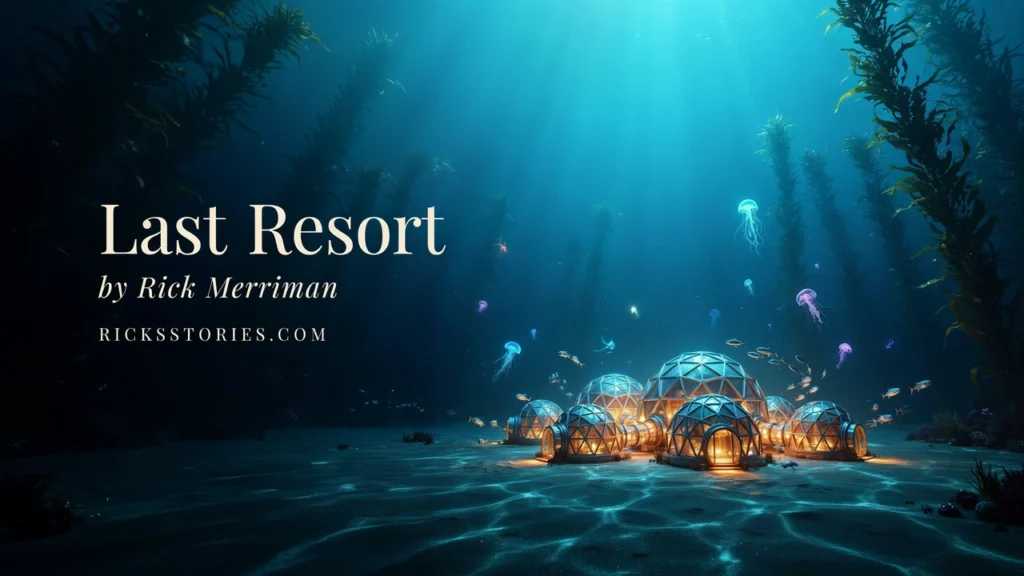
That realization became the foundation for Last Resort. Rather than asking whether humanity could escape Earth, I wanted to explore whether we might learn to survive by adapting to a part of Earth we barely understand. The story isn’t simply about underwater domes or advanced engineering. It’s about resilience, family, sacrifice, and the willingness to redefine what “home” truly means when familiar ways of living are no longer possible.
The best speculative fiction isn’t really about predicting the future. It’s about asking questions that encourage us to see the present differently. If Last Resort succeeds at anything, I hope it encourages readers to look at our own oceans with a little more curiosity—and to wonder whether humanity’s next chapter may be closer than we think.
Read, listen to, view story art, and explore additional content: