
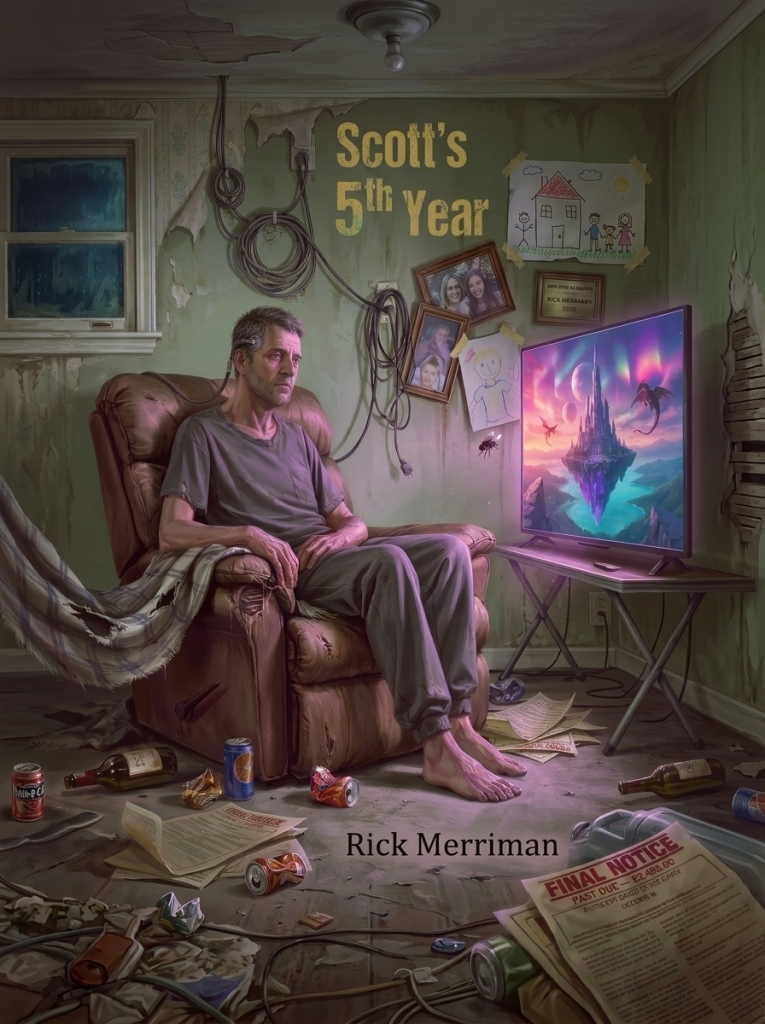
When people imagine the future of virtual reality, they often picture better graphics, faster processors, or more realistic simulations.
I found myself wondering about something else.
What happens when virtual reality stops competing with reality and simply becomes better?
Not just more entertaining. Better relationships. Better adventures. Better opportunities. Better versions of ourselves. At what point does choosing the virtual world stop looking like escapism and start looking perfectly rational? At least it would to the addicts VR is sure to create.
Those questions became the foundation for Scott’s Fifth Year.
The story isn’t really about technology. Technology is only the catalyst. What interested me was the human response. Throughout history, we’ve pursued anything that promised greater comfort, greater happiness, or greater freedom. Virtual reality may someday offer all three at once.
If, or maybe I should say when, that day comes, addiction may no longer look like weakness. It may look like common sense… at least to those who live in it constantly. That is the power of addiction, whether it be alcohol, drugs, gambling, or virtual reality.
Science fiction is often described as predicting the future. I think its greater value is asking the questions before we are forced to answer them.
I don’t know whether virtual reality will ever become as immersive as the world imagined in Scott’s Fifth Year, but it probably will. If it does, or not, it will come close, and I do think we’ll eventually have to decide whether experiencing life is enough, or whether we’ll choose to replace it with something designed to feel even better.
Read, listen to, view story art, and explore additional content: