I hope you like the written or Audio version. If you do, please consider becoming a Patron on Patreon: https://www.patreon.com/c/Ricksstories
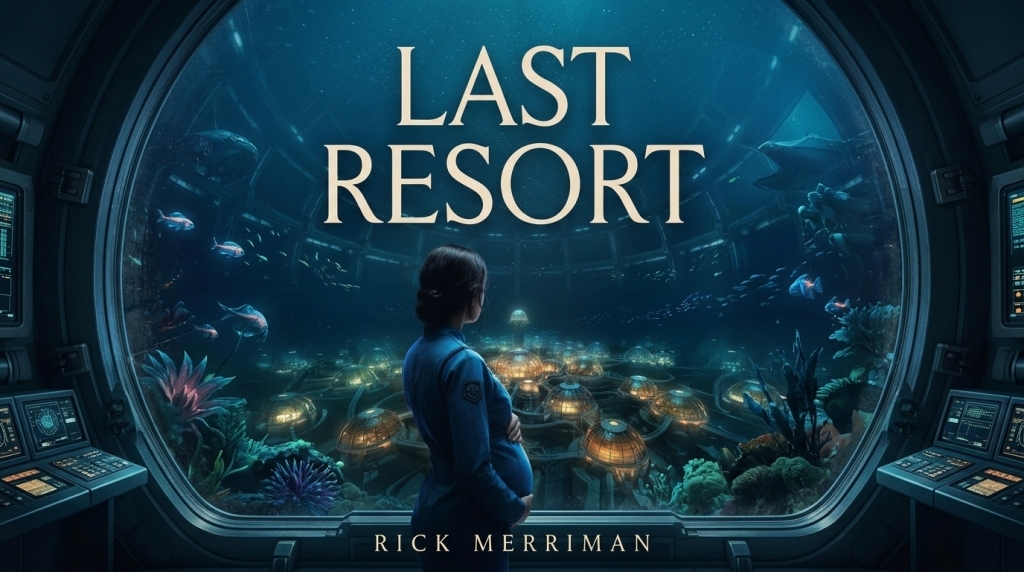
They told us the descent would feel calm, yet it coiled tighter and tighter with each fathom we submerged. The capsule groaned as the winch, at its limit, released us, metal struts straining, water wrapping around us like a fist. Lights from the surface above refracted in the porthole, scattering into strange, liquid geometry, then into nothingness. I gripped Daniel’s hand until his skin was raw, watching the pulse in his throat. He smiled, a fragile promise, and whispered, “Nearly there. Nearly Home.”
Home. The word twisted in my mind. Not sunlit streets or trees, but domes of glass and steel on the ocean floor, braced against a world gone mad.
After the Moon and Mars colonizations failed, we were humanity’s last refuge, our last resort. Overpopulation, famine, poisoned air, and rising oceans had doomed us. Earth’s surface had become a graveyard we had to escape. So here we were, prototypes stranded on the ocean floor, uncertain whether history would remember us or entomb us in silt.
My reflection, captured in the capsule’s steel, shimmered like water, and for a moment, I didn’t recognize myself. My strawberry hair clung damp to my neck, freckled skin pale under the capsule’s muted lights, my hand resting protectively over my growing belly. The deep pressed against us, cold and vast, yet there was a stubborn warmth in that image, a woman tethered to life and possibility. Even so, as we submerged, the ocean washed away the threads of the only world I ever knew.
Through eight inches of reinforced acrylic, I finally glimpsed the domes below in the capsule’s spotlights. They seemed impossibly fragile, yet inside, they promised life: light, food, oxygen, enough for a thousand souls, enough for the child growing inside me.
#
The docking rattled our nerves, metal against metal, hissing airlocks. I expected silence, but the colony was alive: pumps thrummed, tidal turbines low and steady, the muted heartbeat of a world learning to endure below the sea. Warm, damp air clung to me, smelling of iodine, salt, and something metallic. Overhead, panels glowed softly, green-tinted, as though sunlight had been bottled in old glass.
“Madsons, Daniel and Kelly,” a voice called, “This way, please.”
“I’m Dr. Yang, director of health and safety.” She was a slender blonde with piercing blue eyes despite her Asian-sounding name. She exuded precision. Confidence. Her presence seemed to fill the narrow corridor, composed and unyielding. A lighthouse casting order through the murky water that surrounded us.
“You’ll be quartered in Section C. Orientation is at 0900 tomorrow,” she said. “Rest for now. We do our best to maintain equilibrium, even so, adjusting to the pressure down here can take time.”
The corridor curved around the domes. Transparent panels revealed gardens of kelp, swaying like ribbons caught in an unseen tide, and algae mats drifting in slow, hypnotic currents. Daniel whispered, “natural tides for power, Algae for oxygen, kelp for food… and fish pens. Tilapia, I’d bet. It’s amazing how they came up with the perfect balance for us to survive down here.”
I clutched his arm. “Do you think it will work?”
His smile flickered. “It has to.”
#
Quarters were narrow, two bunks, one on top of the other, a fold-down desk of the same bright blue we’d seen the technicians wearing at the landing dock. Shelving was recessed into the steel walls, making use of every possible centimeter. I sat on the lower bunk, hands pressed against the mattress, testing its reality. It was all so surreal, my breath was short, my eyes twitched uncontrollably, like pendulums moving too fast.
“Kelly, are you OK?” he asked, looking me in the eyes before his gaze dropped to my belly.
I wasn’t.
“I’m fine… we’re both fine. It’s probably just adjusting to the pressure. It’s a little bit overwhelming,” I answered, looking to see if his eyes were as bloodshot as mine felt. If he had the same anxiety, the same question: Had we done the right thing?
“Honey, don’t look at me like that,” he said.
“Like what?”
“Like I dragged you here. We chose this, Kelly. Both of us. For the baby.”
I touched my stomach. The surface no longer had room for children. Streets above were patrolled by thin-eyed men in masks, food rationed, air poisoned. But here, at least, the sea cradled a fragile chance at tomorrow.
#
The first week passed in a blur: drills, medical checks, lectures. Systems were explained: tidal turbines anchored in the seabed, microbial fuel cells, and the geothermal vents this depth enabled. No fossil fuels, there was little left for the surface, let alone down here. Every lumen, every breath, every calorie was precious and balanced precariously on the whims of the ocean around us.
“We are the prototype,” Yang said in our first morning orientation. “If we succeed, there will be more colonies, hundreds, thousands. This is humanity’s future.”
Her words weighed heavily. Prototype. Future. Surrendering a world lost. Daniel sensed my apprehension and placed his arm around me and smiled. “We’ll be fine,” he mouthed to me silently. I watched his attentive posture and deep brown eyes full of excitement and enthusiasm. He was copiously taking notes of everything Yang said. I knew that with him at my side, he was right.
We would be fine.
#
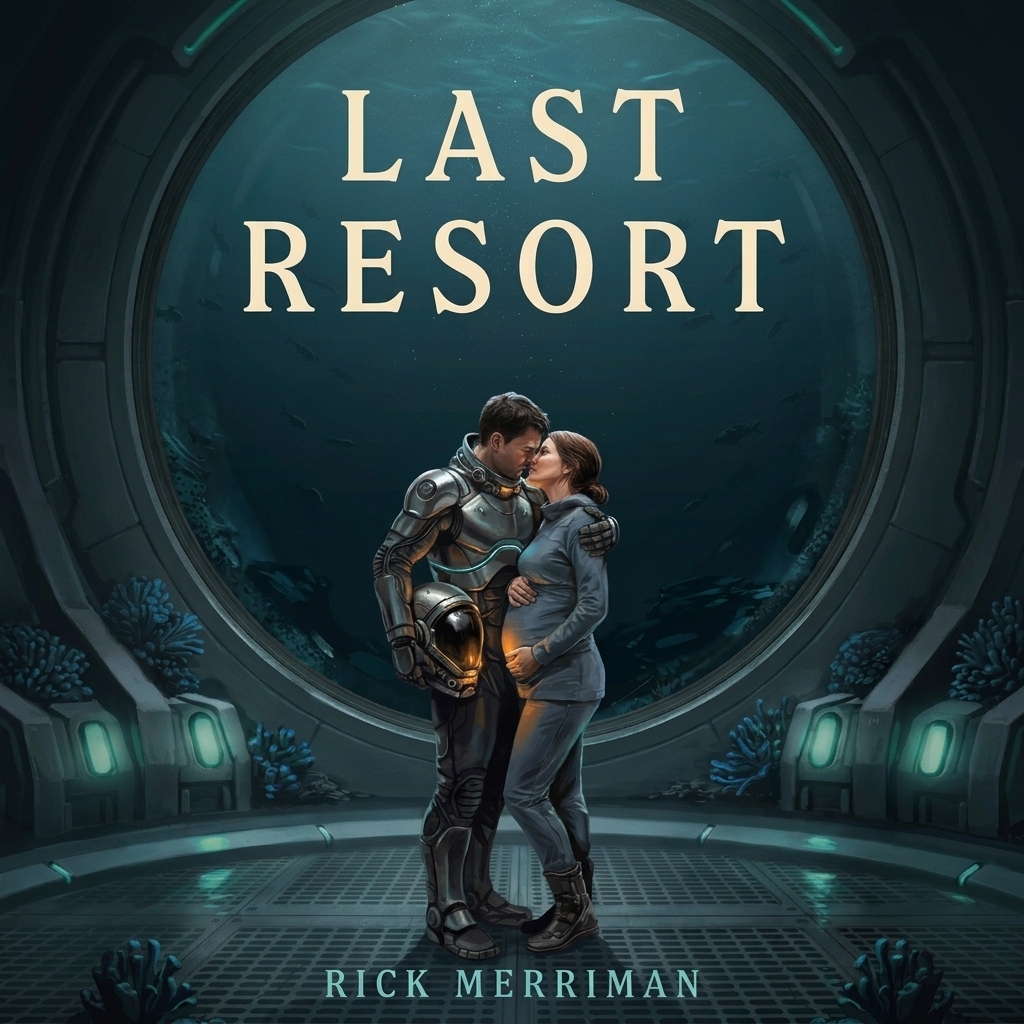
Then Daniel was gone.
He’d been sent to inspect a turbine relay with Ruiz. A training exercise. His first time suiting up and going out into the frigid waters beyond the dome.
His last kiss lingered in my mind: “Back in a few hours. Don’t wait up.”
I waited anyway. Three hours. Four. Eight.
An eternity.
Anna, the only soul I knew from the surface, was the one who came. She was pale against the yellowish-green corridor lights, her usual composure shattered. She was always the calm one, her hands steady even in crisis, her voice measured as she explained root rot or nutrient ratios. Now her fingers tugged at the seam of her sleeve, her eyes darting as though she could find some way to soften what she had to say. When she finally spoke, her tone was flat, drained of life. “There was a fault. The pressure lock…it didn’t hold. He… Daniel… didn’t make it.”
It wasn’t sorrow that unraveled me in that moment, but shock, sharp, jagged, refusing to soften into tears. Those I knew would come later. I clutched my stomach as though I could shield the life inside from the truth I had just heard. Alone now, I carried not just his child, but the burden of continuing in a world he would never see.
#
Days passed in a muted haze. Condolences were offered, formal and distant, like signals lost in the deep. I drifted through corridors, sat by the observation glass, watching the dark waters swirl. Sometimes a fish darted past and caught the light of our port windows, ghostly and abyssal, as though the sea had known loss long before I had.
Anna brought trays of kelp broth or fish. Ruiz checked in silently, his eyes shadowed. “I’m sorry,” was all he could say.
Anna often lingered after setting down the tray, her hand brushing the edge of the table as if she wanted to reach for mine. She never spoke of Daniel, never pushed, only stayed long enough to remind me that someone still cared about me in this dim place. That, more than the food, kept me upright. Kept me going.
At night, the colony’s breath pressed in on me, pumps cycling, turbines grinding, the regulated thrum of machines standing in for wind and trees. The sound was steady, almost soothing, but I barely slept. It whispered of equations and limits, of how thin the line was between life and collapse. We hadn’t built a sanctuary, we’d sealed ourselves in a pressure cage at the bottom of the world.
Yet inside me, life persisted. Small, stubborn, unyielding. And with that, I knew I must press forward.
#
They held the service in the central dome, a space too small for so many of us. The colony leaders called it a memorial, yet it carried the air of a rehearsal, as though we were testing how to grieve beneath the sea.
Dr. Yang spoke formally, her voice careful, each word measured as though she feared saying too much.
Ruiz, the colony’s leader, stood stiff at her side, grief etched in the tightness around his mouth.
Anna hovered near me, her hand brushing mine, a quiet anchor.
They read Daniel’s name aloud, his name, stripped of his essence, flattened into syllables. They said he was brave, necessary, a pioneer. They said he had given himself to the future of the colony, to the future of humankind. To them, he was a hero.
To me, he was the missing step in every corridor, the absence that made me stumble.
I stared at the observation window behind them, the ocean pressing dark and endless, and thought only of how quickly water could claim a body, how swiftly love could become absence. My son kicked within me, sudden and insistent, and I realized he would never hear his father’s laugh, never know the warmth of his kiss.
When the ceremony ended, others dispersed quietly, their faces pale, their condolences murmured like actors stumbling through a play no one wanted to perform. I remained standing long after the crowd thinned, until Anna guided me gently away. The colony returned to its rhythm, pumps, turbines, lights, all carrying on as if nothing had been broken. Only I was damaged, carrying a hole that no ritual could fill.
#
Anna pulled me from isolation after a fortnight lost in grief. “You can’t sit here forever,” she said, clipboard hugged to her chest. “For our mission, you were selected because you’re a data entry specialist, right? Well, we need help in the gardens. Growth is below expectations, and it’s critical for all of us. Kelly, you need to do something that will distract you. In the garden, recording the data we need will help you forg…”
She stopped midword. “It will help all of us.”
“I don’t know plants.”
“Most who have been reassigned there don’t,” she said. “We learn together. It’s needed. Come.”
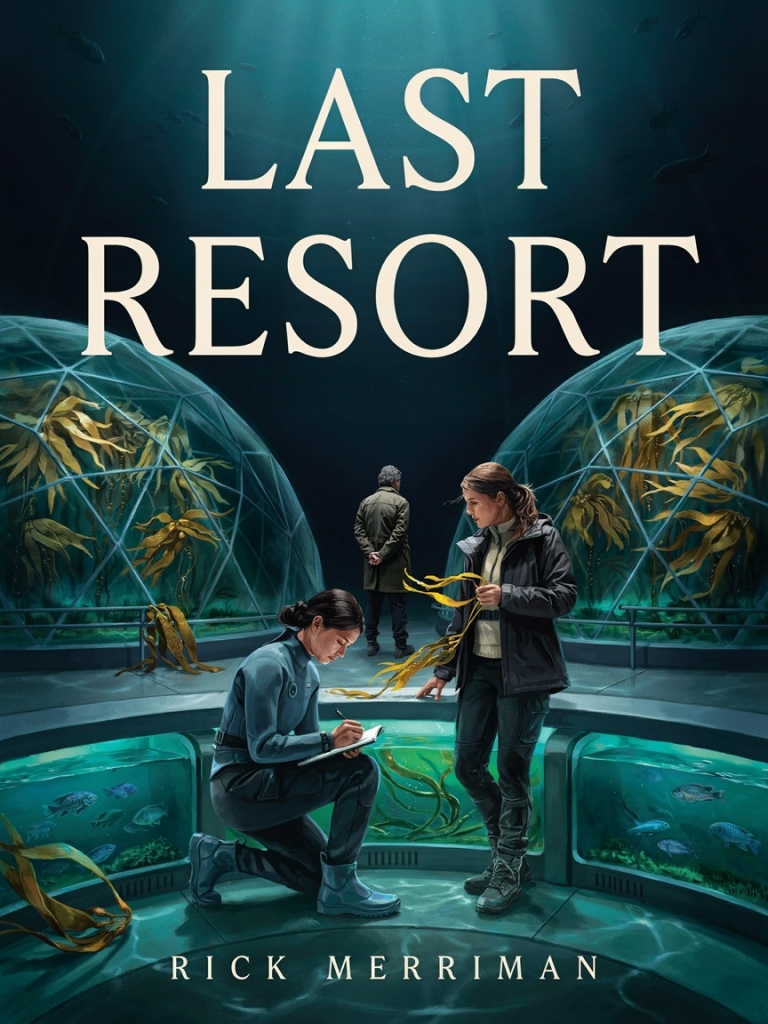
The gardens were otherworldly. tanks of kelp and algae, fronds drifting like ribbons, mats of green spreading like spilled paint. Water smelled sharp but alive. I breathed deeply, unaccustomed to such vitality.
Ruiz was there, apron damp from the work. His presence carried the weight of oceans themselves, steady, constant. Lines creased his forehead from sleepless nights and impossible calculations. Eyes sharp, alert, he moved like a man who could feel the colony’s pulse through the metal floors beneath his feet. In every gesture, there was both the curiosity of a scientist and a leader’s careful restraint. He was like a twin with two distinct personalities, both who knew that one misstep could doom us all.
“It’s Kelly, isn’t it?” he asked, approaching me. “Anna said you might come.”
“I can’t promise much,” I said.
“Just record growth, color, density. Anna will show you. The kelp tells us what it needs. We listen.”
Hours passed in methodical work. Anna hummed some tune beside me. She nudged fronds into alignment, pointed at algae that darkened or lightened. “Discoloration means nutrients are off or oxygen dipping.”
“Dipping?” I asked.
“The filters and scrubbers are straining to keep up,” she said.
Ruiz joined our conversation, voice grim. “Everything strains. Fish need clean water, algae and kelp do as well. And light, of course. Light is our most fragile tether.”
I glanced upward. Panels shimmered, bioluminescent organisms coaxed to a constant glow. “Not bulbs or LED?”
“Some high-efficiency LEDs are used when it’s needed, but mostly biological sources. LEDs burn energy and the tidal turbines falter to keep up with what our other systems need. Microbial fuel cells give only a little, that’s why the bioluminescent panels are so big.” He seemed more alive speaking of science than wearing the mantle of leadership. “Just like on the surface,” he continued, “light is life, and down here every lumen counts.”
I scribbled the numbers of what he told us was needed to maintain survival, but his warning words stayed with me more than the data.” Light, food, oxygen, fresh water. All our lives balanced on a knife’s edge”.
#
That night, rations were kelp broth with slivers of tilapia. Around me, voices buzzed:
“…another blackout in Section D…”
“…power storage almost tapped…”
“…someone’s tampering…”
Anna shook her head, “just gossip, don’t listen.”
It was Ruiz’s voice that cut through the panic, firm but calm, carrying the weight of command. “Enough. Rumors drain morale quicker than shorts drain batteries. Eat what is rationed, follow the guidelines, trust the systems. We are stable. We will endure.” His words hung steady in the recycled air, though a faint tremor beneath them betrayed how much was at stake.
#
Harlan cornered me a few days later.
His face was cut with sharp angles, nose bent from an old break, mouth curled perpetually into something between a grin and a sneer. He met every command with a half-smile, the kind that turned compliance into mockery without a word spoken. Grease clung to his hands, but it wasn’t from sanctioned work, he prowled the maintenance corridors after hours, prying into panels, always seeming to be searching for something or another.
“Don’t trust everything they tell you,” he murmured. “Ruiz and Yang want you to believe we’re trapped. But the surface isn’t as bad as they claim. We could leave. Before it’s too late.”
I froze. “Back? To what?”
“To life,” he said. “Better than cages and recycled air.”
I pressed my hand to my stomach. “There is no surface worth living on. None. That’s why we’re down here to begin with.”
His jaw tightened, voice bitter. “Then you’re blind. You’ll die here.”
“Yes,” I answered. “We will all die here, sooner or later. But until then, we do what we need to survive.”
After he left, I remained near the kelp tanks, letting their slow dance soothe me. Fronds trembled in dim light, algae flowing like liquid silk, fish flashing like the shards of moonlight I had almost forgotten. Life pressed onward, insistently, against pressure and darkness. My child moved beneath my hand, a quiet testament of endurance.
Of Hope.
#
Purpose might have taken root, but mourning was a constant companion, shadowing every small step forward. Periodically, my grief and depression would overtake me, but Anna was insistent that it not consume me completely. She pulled me from the dim corridors, from hours spent staring at water beyond glass, into the beating heart of the colony. The days fell into rhythm quickly, a cadence of work, observation, and quiet rituals.
Mornings began with the hum of turbines, the soft pulse of the domes’ floodlights filtering through the portholes, casting moving patterns on metal floors. I learned to measure air, monitor the algae tanks, check oxygen sensors, and note small fluctuations in all the garden’s readings. Each task was precise, repetitive, yet vital, each success was a reminder that life here required constant tending.
Anna became my anchor. She had a way of making the mechanical and the biological feel like extensions of the same organism. She guided me gently at first, showing how to trim a frond without killing the mat beneath, how to coax algae to grow into a more vibrant green, how to feed the tilapia so they would flourish without overtaxing the system. Her laughter was rare, but it felt like sunlight caught in the branches of a forgotten forest, cutting through the monotony of metal and water. Over cups of kelp broth, she told stories of the surface, the beaches she had walked as a girl, the wind on her skin, and I listened, hungrily tasting a world I would never see again.
I grew stronger in small, imperceptible ways. I learned to bend without breaking, like the kelp, swaying with currents rather than resisting them. I learned to move softly in the corridors, respecting the quiet pulse of the colony, or competing with the ever-present hum of life-support systems. They were a reminder that each breath was borrowed from machinery and vigilance. Anna noticed when I faltered and offered steady encouragement. Through her, I discovered that even at a mile below the surface, bonds could take root and grow.
By the end of those early months, the colony no longer felt like a cage but a fragile, breathing organism in which I had a place. Anna and I would wander the garden domes late at night. She would talk about her life above water with wistful fondness, and I would find myself imagining it, even as I felt the baby within me kick in rhythm with the gentle current. Through shared work, shared observations, and the quiet laughter that occasionally broke through our routine, I began to feel tethered to the colony, to its fragile life, and to Anna.
#
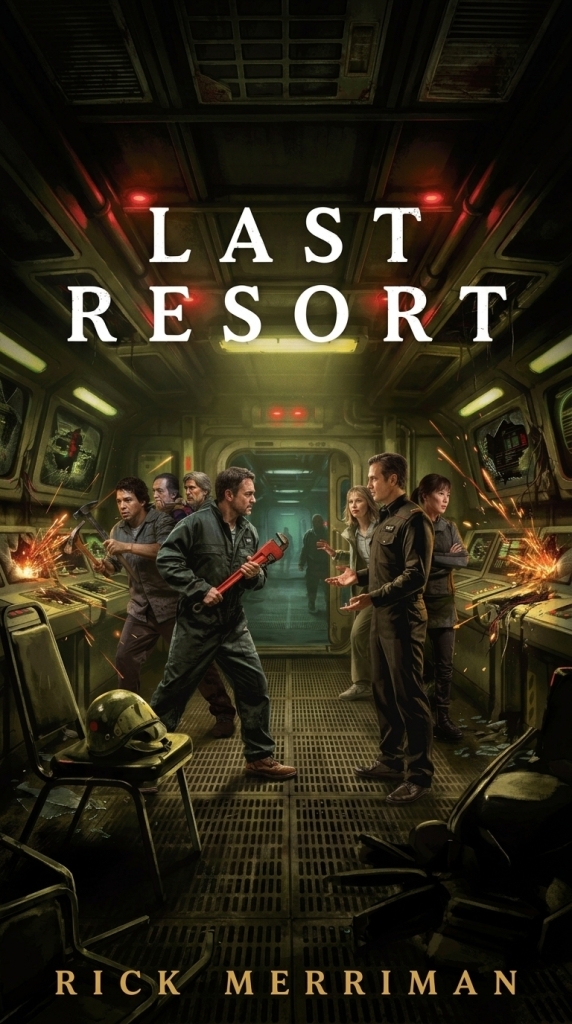
It started quietly, small details that didn’t add up, and soon we all saw the shadow of sabotage taking shape. One morning, the fish pens’ oxygen sensor was clogged with plastic sheeting, wedged too deliberately to be chance. Later, the algae tanks took on a sickly tint, though records showed they had been fed properly. The turbines slowed without warning, throwing the power grid into chaos. Ruiz swore under his breath as he directed technicians to patch the systems. “This isn’t simple failure,” he muttered, voice low. “It’s deliberate. Someone is jeopardizing all we have built. What do they think? That we will just abandon the colony if things get bad enough?”
The first total blackout struck during dinner. Lights shuddered, then collapsed into darkness. Panic spread in waves, voices sharp and frightened. Emergency strips glowed faintly a sickly yellow-green like toy glow-in-the-dark skeletons on Halloween. I felt Anna’s grip on my arm like a vise. “It has to be sabotage.”
We ran with Ruiz to the control room and found Harlan already there, flanked by seven others, faces drawn, desperate. Harlan stood at the center, shoulders squared, seven men and women braced behind him with wrenches, screwdrivers, and sharpened steel rods that glinted like makeshift swords.
“You’ve had your chance,” Harlan yelled, almost triumphant. “Months of drills, months of scraping algae and counting kelp leaves. For what? To pretend this tomb is a future? Not for me. Not for us.” He waved his hand towards those behind him.
“We demand release,” Harlan said. “All eight of us. The rest of you can drown here if you want.”
The other mutineers shouted fiercely, voices rising into a chorus that echoed his defiance.
“This is not what I signed up for.”
The words came from Michelle, a cook I’d only ever known for her quiet humor over steaming trays. The shock of seeing her among Harlan’s mutineers shocked me. She looked so out of place, yet her eyes burned with the same hard fire as the rest.
“We want up and out of here,” the protest burst from another throat, angry and insistent, yet it merged instantly with the rest, their cries folding into a single tide of defiance.
“You can’t keep us in this tin can!”
“Release us.”
Anna stepped forward, trembling. “Release to where?” she whispered. “Nothing is waiting for you up there.”
Harlan sneered. “You’ve swallowed their lies. Poisoned skies, unbreathable air, all propaganda to keep us docile. We know there’s life left up there. People. Food. Sunlight. You think they built this place for our salvation? This was never a refuge, it is an experiment that’s already failed. Better to end it now than drag out the dying.” He slammed his wrench onto the console, sparks spitting. “Give us the means to leave, Ruiz, or we tear this place apart.”
“Leave?” Ruiz barked. “There is no leaving. The surface is all but gone. Dead. Do you think the people up there, the ones with little food and poisoned water, will welcome you back?”
Harlan’s eyes fixed on me. “Your child deserves the sun, not recycled breath and algae stew. Don’t you want it to have a chance at real life?”
I could only shake my head. “There’s nothing left. The atmosphere is almost gone. Up there is only ruin, polluted air, and rising oceans where cities once stood. You’ve got to know that, we all saw it.”
Ruiz slammed a fist against the console. “Enough of this Harlan! You think the government will send ships? That we’ll be pulled back up if we fail?” He turned, his face sternly daring the eight mutineers to contradict him. “There will be no rescue. No winches. No submarines. There will be no return. They told me that before we left. This is it. Humanity has nowhere else to go.
Harland began to open his mouth.
“Listen,” Ruiz yelled before Harlan could speak, “there will be no rescue. None. They don’t have the means, even if they wanted to. If we live, they’ll rejoice and duplicate what we’ve done. If we die, then they’ll try again with a thousand more just like us who are hoping and praying they will get a chance at life. But make no mistake, there will be no rescue. Continue with this bullshit, and we all die. Period! Have I made myself absolutely clear?”
Then the edge in his voice gave way to calm, “like it or not, we are here for good.”
The words hung heavier than the sea itself. Harlan faltered, his bravado cracking as if Ruiz had torn the voice from his throat mid-breath. His crew looked at one another, tools slipping from their hands. Finally, Harrlan lowered his head. “Then we’re already ghosts,” he whispered. One by one, his conspirators surrendered to reality, the rebellion collapsing in silence.
#
After the blackout and the sabotage, the scale of damage revealed itself slowly. The turbines had not merely stalled, their regulators were scored and twisted, metal shavings scattered through the housings. Light panels flickered unevenly, half their circuits fried by sudden surges. The fish pens, though unclogged, bore scars from tampered-with sensors that had begun to corrode in silence. Every system carried signs of near-collapse.
The work began in shifts around the clock. No one was spared. Gardens needed pruning, tanks recalibrated, turbines stripped down and rebuilt by hand. Ruiz assigned the saboteurs not to punishment, but to the front lines. Their guilt made them relentless. They hauled water filtration units on their backs, worked sleepless nights in the gardens, and stood knee-deep in tanks scrubbing algae enclosures until their arms trembled.
At first, eyes followed them with suspicion. People spat after their presence, muttered of betrayal. But the colony was too small for exile, too fragile for vengeance. Over time, their sweat blurred the memory of their crime. When one of the eight fainted from exhaustion, Anna was the first to kneel, lifting him to his feet. Others followed.
Forgiveness did not come in words, but in the silent passing of tools, the nods across crowded work bays, the shared relief when systems came back to life. They had nearly broken the colony, yes. But hadn’t everyone, in secret moments, wondered if the sea was a tomb and the surface their only chance? The eight had acted on that doubt. The rest of us had just swallowed it.
#
Months passed. Labor approached, subtle at first, then undeniable.
When the contractions were less than five minutes apart, the mothers among us knew it was time.
The medical bay carried the sting of iodine, the metallic tang of steel warmed by the bioluminescent lamps. Anna’s steady hands laid out swabs, clamps, and blankets, her movements deliberate but tender. I lowered myself onto the narrow cot, fingers brushing the crisp fabric, and the hum of the machines felt louder than ever. Here, in this chamber sealed against the abyss, a new life would begin. No horizon, no sky, only the vast weight of the ocean above and fragile recycled air.
Pain came in waves, relentless but purposeful, then my water broke. I clutched Anna’s hand, whispered Daniel’s name, and murmured promises to Anna, to Daniel, to God himself as I held my breath between contractions. Outside, the colony held its breath too, this was to be the first child born to the colony.
Even with the promise of new life, the colony’s mechanical lifeblood continued uninterrupted. As 1000 souls held their breath: Turbines still thrummed, pumps still hummed, biopanels still glowed softly, a choir of human-engineered life.
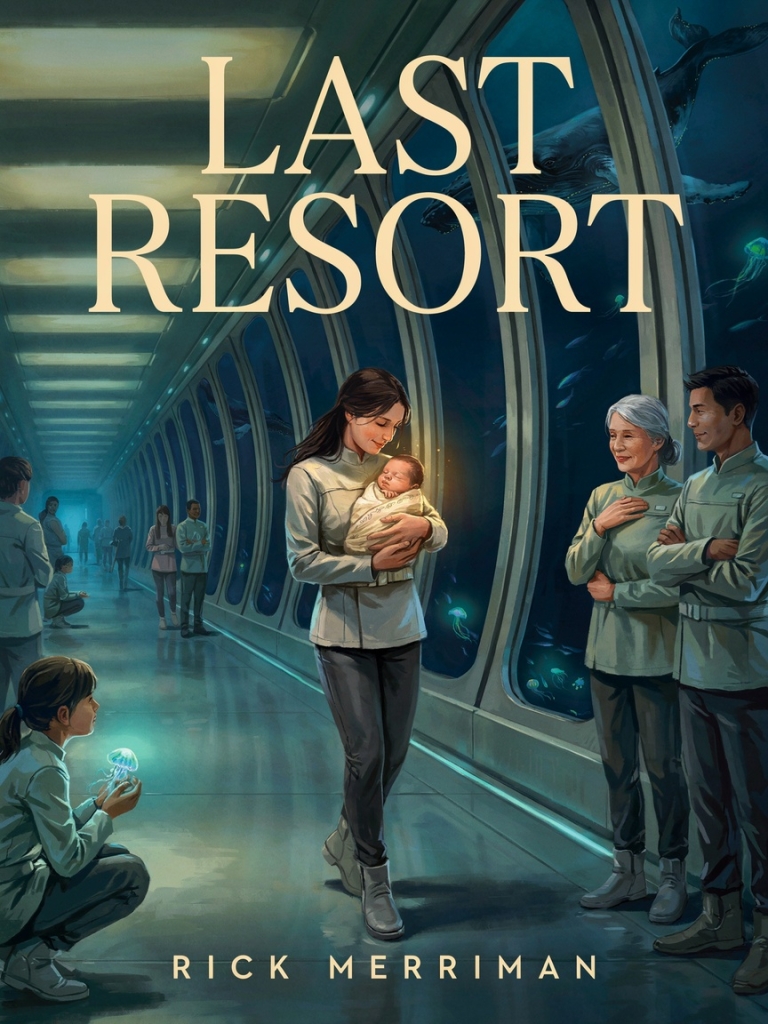
And then, with a slap, he cried. Small, insistent, alive. Daniel, my son. Pink, perfect, fists clenched, already asserting his defiant claim on life.
Word spread quickly. People emerged from quarters, whispering, peeking through observation windows. Ruiz’s hands shook as he offered congratulations. Anna brushed tears from my cheeks. Even Harlan, subdued and distant, glanced through the glass in quiet awe.
This child was more than a life born; he was a symbol of endurance. The colony was no longer just a fragile prototype. It was proof that humanity could survive.
Days later, I walked the halls with Daniel swaddled against my chest. People touched him, offered quiet smiles. The colony was no longer only about survival, it was about hope, a sign of our determination.
At the observation windows, I pressed my hand to the glass, watching currents spiral, distant bioluminescent life flicker beyond our domes. The ocean floor was no longer a grave. It was a garden. The domes were no longer cages. They were incubators of life, persistence, and hope. And through it all, beneath a mile of water, humanity had proved its stubborn resilience.
I hope you enjoy both the written and Audio versions of my stories. These are published about once a week. Please consider supporting me to continue this work on Patreon:
https://www.patreon.com/Ricksstories